
Local
Snack Tumpeng, Introducing Local Food Heritage to the Younger Generation
YOGYAKARTA
(MAN 2 Yogyakarta)
– The celebration of MAN 2 Yogyakarta’s 76th Anniversary at MAN 2 Yogyakarta
became even more vibrant with the Traditional Snacks Tumpeng Competition
held among classes on Tuesday (September 1, 2026). The word “tumpeng” comes
from the Javanese phrase “Tumuju Ing Pangeran,” which means “devoted to
God.” It symbolizes the belief that human life is ultimately directed toward
and dedicated to God.
The
competition served not only as a platform for students to demonstrate their
creativity and teamwork but also as an opportunity to reintroduce traditional
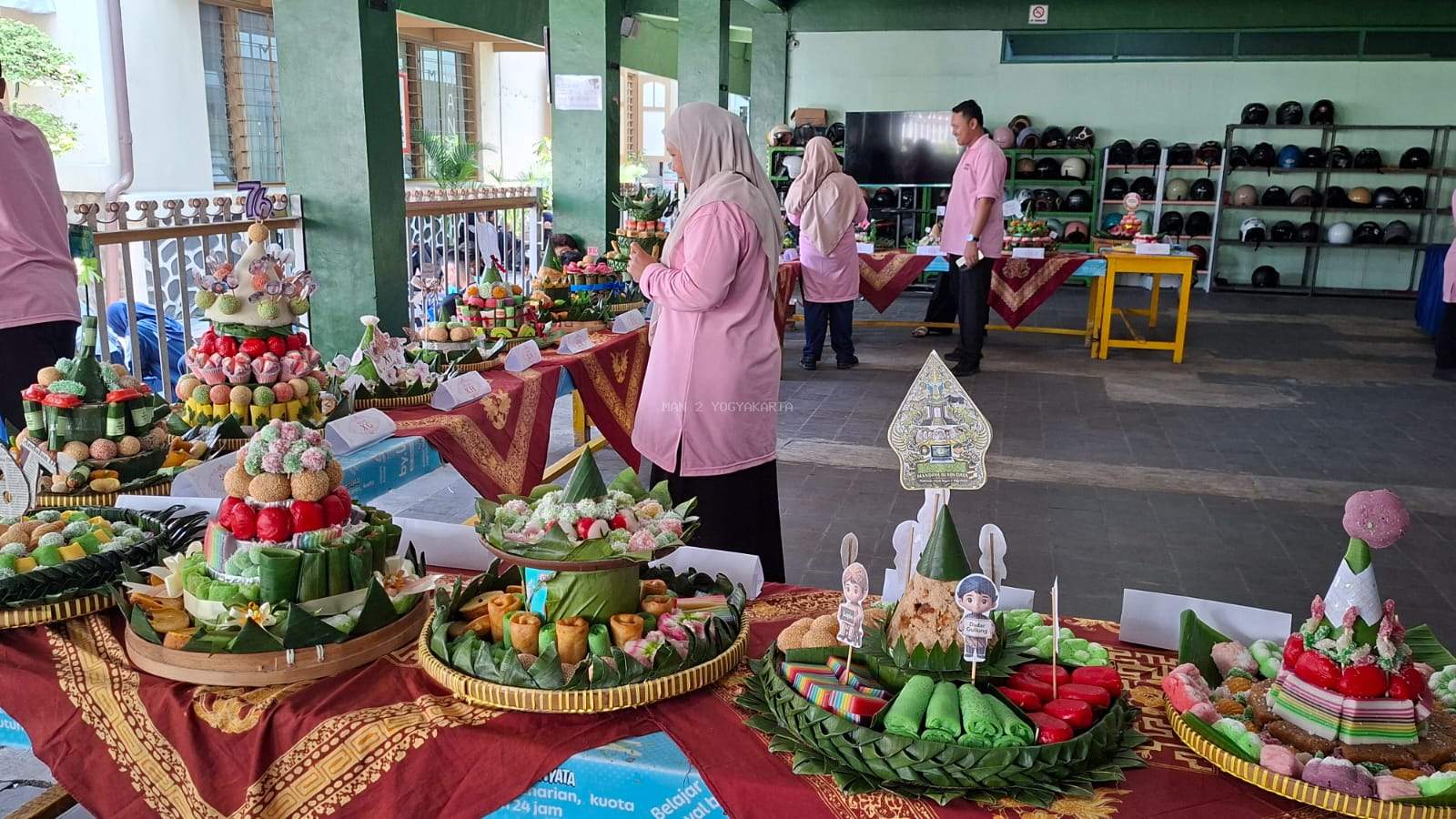
snacks as part of Indonesia’s rich local food heritage. Each class creatively
arranged a variety of traditional market snacks into an attractive and
meaningful tumpeng.
The
tumpeng-making process took place in the veranda of the MAN 2 Yogyakarta
mosque. Once completed, each class’s creation was carefully displayed in the
main parking area of the madrasah for evaluation by the panel of judges. A wide
variety of traditional snacks were creatively arranged, with students paying
attention to presentation, neatness, composition, and visual appeal. The
atmosphere was lively as each class competed to showcase its best creation as
part of the Mandaya 76th Anniversary celebration.
The
Principal of MAN 2 Yogyakarta, Hartiningsih, S.Pd., M.Pd., expressed her full
support for the activity. She highlighted the educational value of the
competition, particularly in introducing young people to the richness of
traditional foods available in their communities. “This traditional snacks tumpeng
competition is also a way to introduce the younger generation to the fact
that our region is rich in local food products that are attractive and worth
enjoying,” she said. Through this activity, students are expected not only to
appreciate and enjoy traditional culinary heritage but also to develop a
greater awareness of the importance of preserving local culture and food
heritage.(win)